
Why Hormone Therapy Isn’t Working
4 Hidden Disruptors That Could Be Blocking Your Results.
Why Aren’t Your Hormones Cooperating — Even With Therapy?
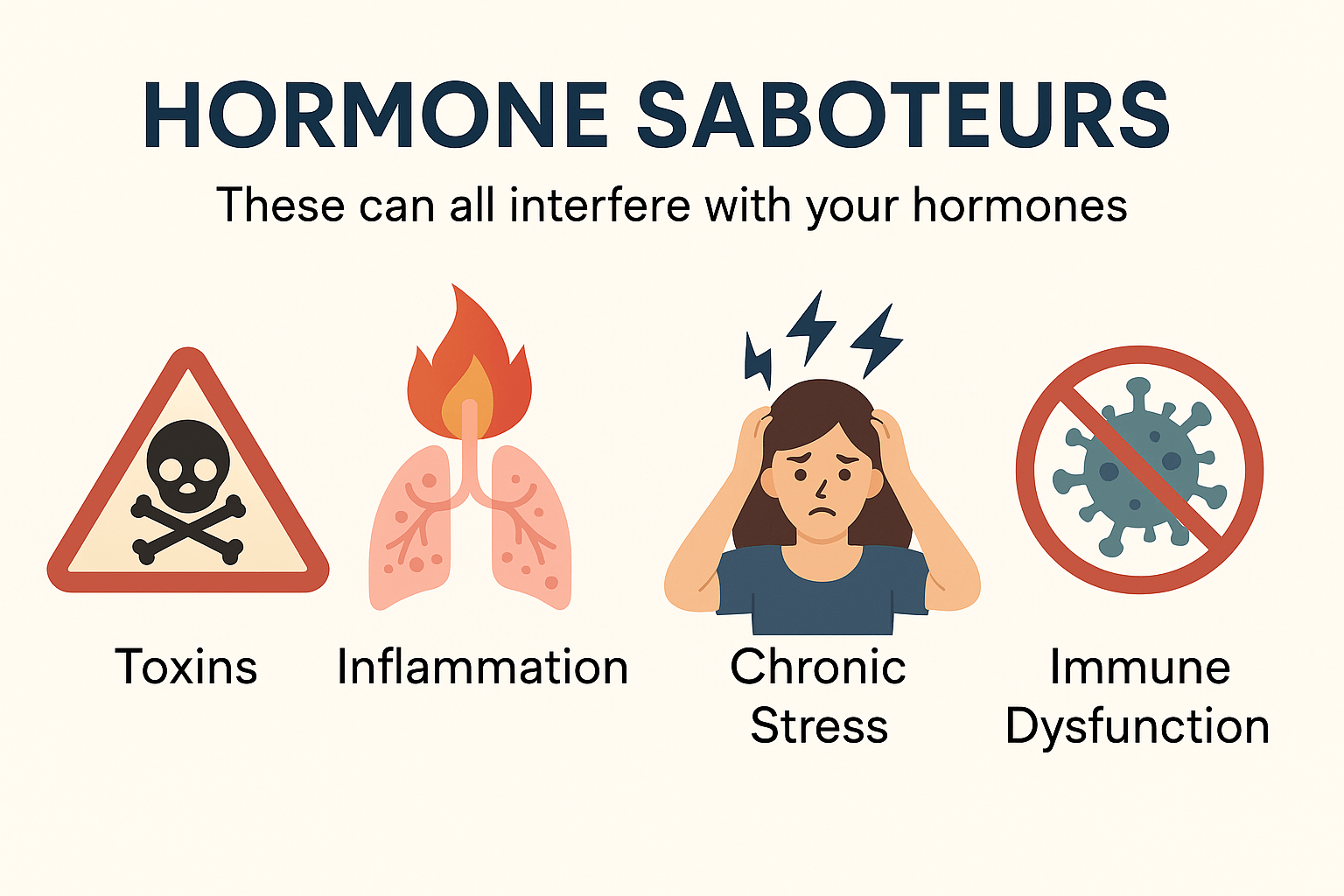
You’re eating clean, maybe even taking bioidentical hormone therapy — but your body isn’t responding the way you hoped. That’s because common “hormone saboteurs” could be interfering with how your hormones are made, transported, or used. Before you change your dose, it’s worth checking for these root causes.
💡 Did you know? Even a small toxic burden or persistent inflammation can block estrogen, testosterone, or thyroid hormones from working — even if your blood levels look normal.
The Problem with Standard Lab Tests
Many standard hormone panels look only at what’s floating in your bloodstream — not what’s actually reaching and activating your cells. So your estrogen, testosterone, or thyroid levels might appear “normal” on paper, but your body may still be starved for hormones at the tissue level.
🚦 Cellular Traffic Jam: Hormones Can’t Reach the Cell
Even if your hormone levels look normal on a lab test, your cells might still be starving for them. Why?
Because hormones must dock at cell receptors to do their job — and those receptors can be blocked or impaired by toxins, inflammation, or oxidative stress.
Imagine a traffic jam at rush hour.
No matter how many delivery trucks are on the road (your hormones), if the entrance ramps (your cell receptors) are blocked, nothing gets through.
This is why you can feel tired, moody, or foggy despite “normal” labs.
It’s not just how much hormone you have — it’s whether your cells are getting the signal.
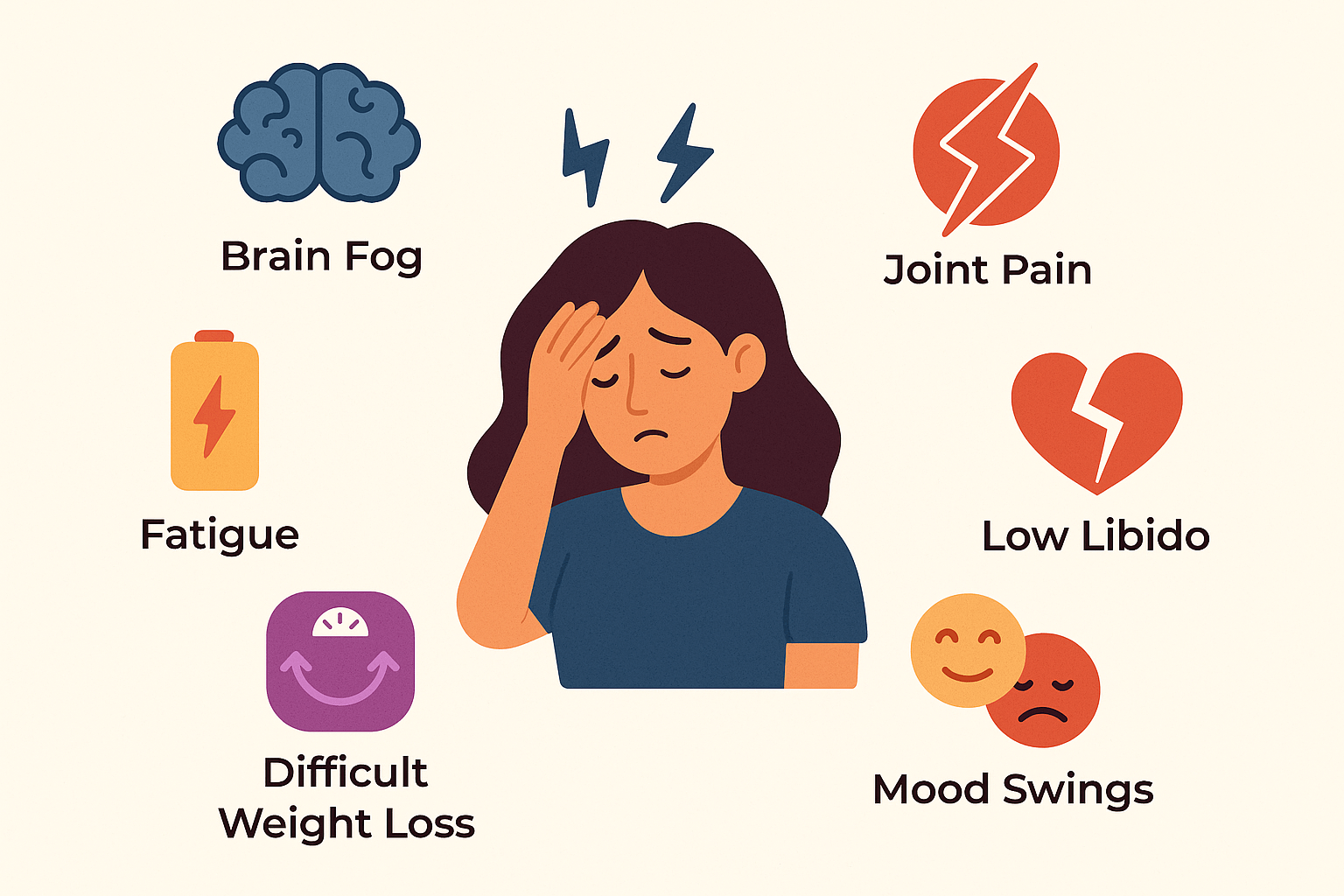
Common Symptoms of Hormone Imbalance
Hormone imbalances can affect people of any age and any gender—often without warning.
From stubborn weight changes to fatigue, mood swings, and low libido, these signs often go unexplained or dismissed as “normal.” But you don’t have to guess.
Do any of these symptoms sound familiar?
🧪 What Could Be Blocking Your Hormones?
Your labs look “normal.” You’re on hormone therapy. But you still feel off. Why?
The problem might not be your hormones—it could be your receptors.
Toxins like mold, heavy metals, gut pathogens, and pollutants can silently block your hormone receptors from working—even when your hormone levels are optimal.
Take this quick 2-minute quiz to find out what could be interfering with your hormones—and get personalized suggestions based on your results.
🧪 Take the “Toxic Load Quiz”
Answer a few quick questions to see if hidden toxins might be blocking your hormones.
✅ No guessing. Just science-backed insight in under 2 minutes.
Even when labs look “normal”